Every initiative in The Panama Project traces back to a single moment of isolation in 2020. What follows is that story, told as it happened — year by year, decision by decision.
2020
Isla Colón, Panama
A Mission Interrupted
Steve Bender, President of the Rotary Club of Newport Beach and CEO of Ayuda International, was in Panama preparing a humanitarian dental mission when COVID-19 shut down global travel overnight. His team was stranded in California; Steve himself was stranded on Isla Colón, a small island off Panama's Caribbean coast.
Cut off from his team and the rhythm of his humanitarian work, Bender faced an unplanned pause — one that would soon become the origin point for everything The Panama Project has since become.
"Rotary teaches us through its motto, ‘Service Above Self,’ that true leadership begins with helping others."
Steve Bender
Bocas del Toro Archipelago
Isolation Becomes Action
With borders closed, the isolation of Bocas del Toro's outer islands became painfully clear. Seniors, Indigenous Ngäbe-Buglé families, and small fishing communities were suddenly without reliable access to food, fuel, or medicine.
Bender organized a grassroots emergency supply network, using small boats to deliver essentials to the most vulnerable. Within weeks, the effort had grown into a coordinated lifeline — and the trust built along the way became the foundation for every initiative that followed.

2020
2020–21
Marine Environment & Food Security
Beneath the Surface
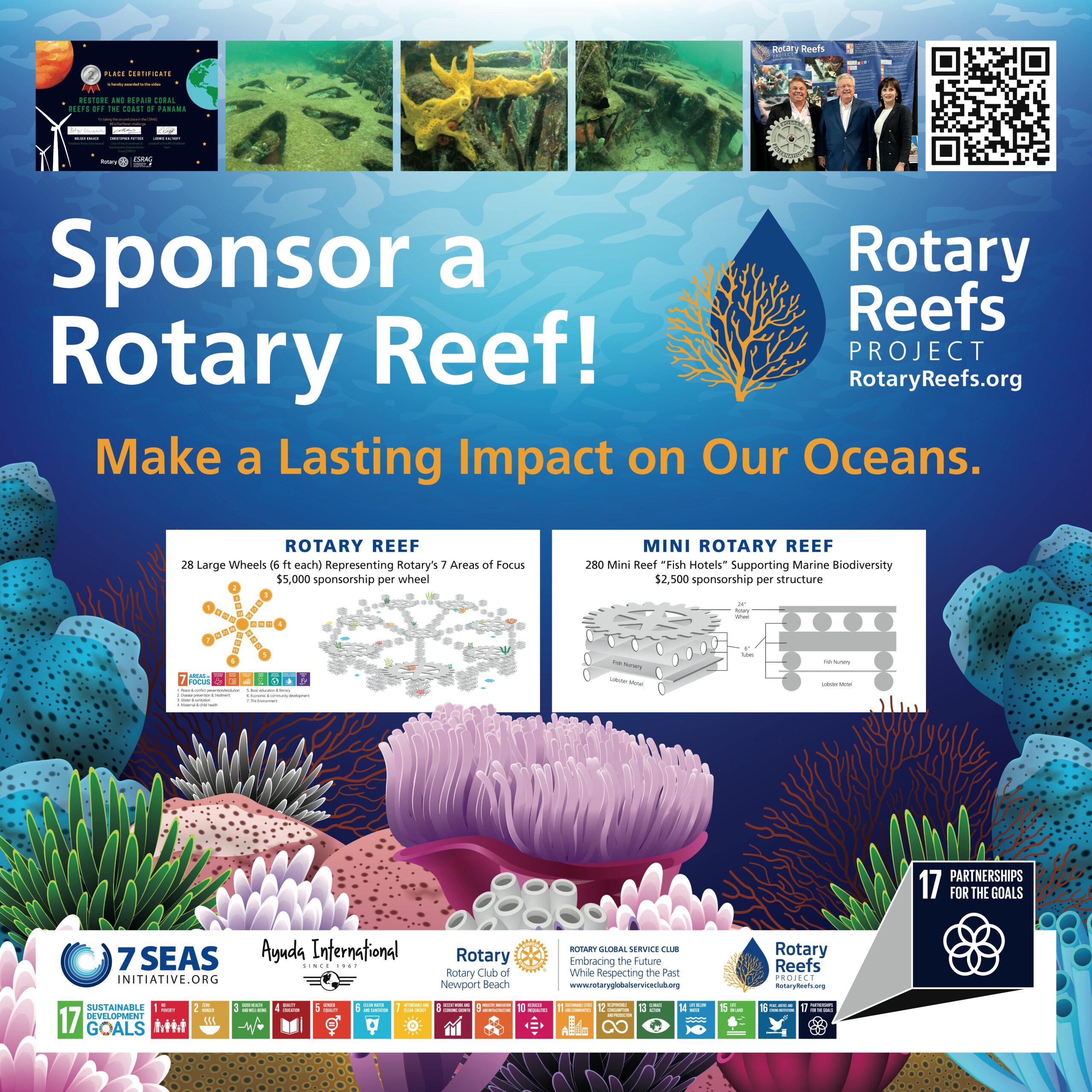
Between supply runs, Bender — a PADI Master Diver — returned to the sea and found coral bleaching, shrinking fish populations, and an invasive lionfish crisis. He founded the Rotary Reef Program, partnering with local divers and scientists to build artificial reef structures, establish a coral seed bank, and train fishermen to harvest invasive lionfish for income while protecting native species.
On the same supply runs, he noticed imported pineapples arriving even as local fruit rotted unpicked nearby. That observation became Bocas Bounty, a community exchange program for fruits, vegetables, seeds, and fish — a food-security effort that grew into a lasting movement uniting Indigenous, Afro-Caribbean, and expatriate communities.
Biodiversity & Reforestation
Roots for the Future
A visit to a Green Macaw Rescue Centre in Costa Rica introduced Bender to another crisis: the disappearance of the Great Green Macaw from Panama due to deforestation of the mountain almond tree, its only nesting habitat.
Partnering with local conservationists and the Panamanian government, he launched a mass reforestation effort. In its first year alone, more than 5,000 almendro saplings were planted across the islands, with fruiting trees expected by 2028 and macaws hoped to return to Bocas by 2030.
"The best time to plant a tree was 20 years ago. The second-best time is now."
2021–23
2022–24
Community Health
Care Beyond the Clinic
The Oral Hygiene Initiative became a core part of the project's health-care work. During an early restorative dental clinic, the team discovered that children in Bocas del Toro had more dental problems than children served in orphanages across Mexico, Thailand, Cambodia, and India — not from lack of resources, but from a lack of preventive education.
The initiative pivoted toward prevention: adopting entire communities, delivering educational programs, and distributing 1,000 bamboo toothbrushes and fluoride treatments through recurring volunteer missions.
1,000 toothbrushes distributed
Recurring fluoride clinics